The Truth About Tulips on a Flower Farm
Tulips are one of the most anticipated flowers of spring—symbolizing fresh starts, color, and the shift into a new growing season. But if you visit a working flower farm during tulip harvest, you might be surprised. You won’t find rows of fully open blooms swaying in the breeze. Instead, you’ll see tight, closed buds being carefully pulled from the ground.
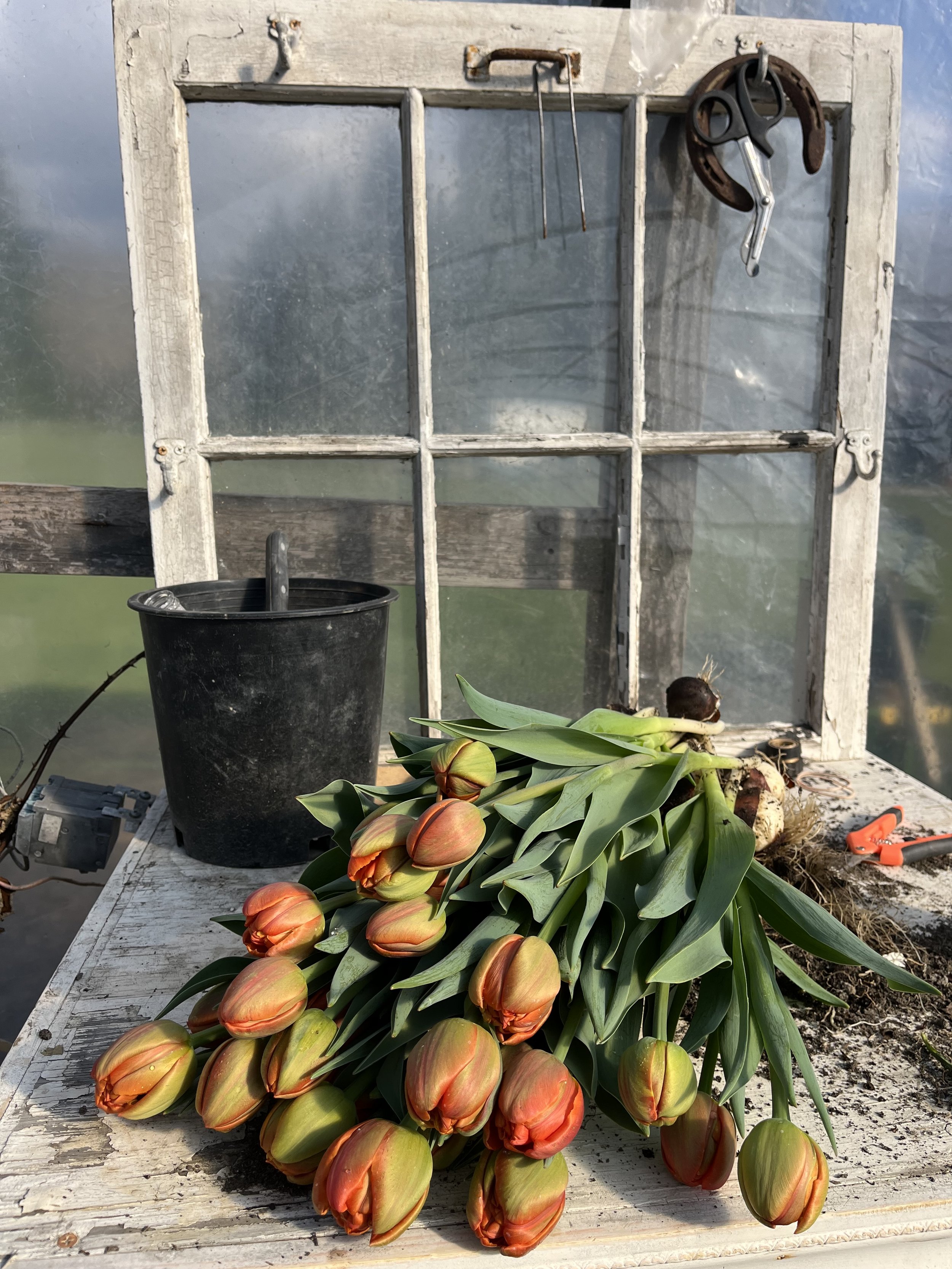
Icoon being harvested
That’s because tulips for cut flower production are harvested at the “closed stage.” At this point, the flower is still firm, colorful, and just beginning to show its petals. Harvesting early ensures the longest vase life for customers. Once placed in water, these tulips continue to grow—stretching toward the light and slowly opening over several days. It’s part of what makes them so special: they’re still alive, still moving, still changing.
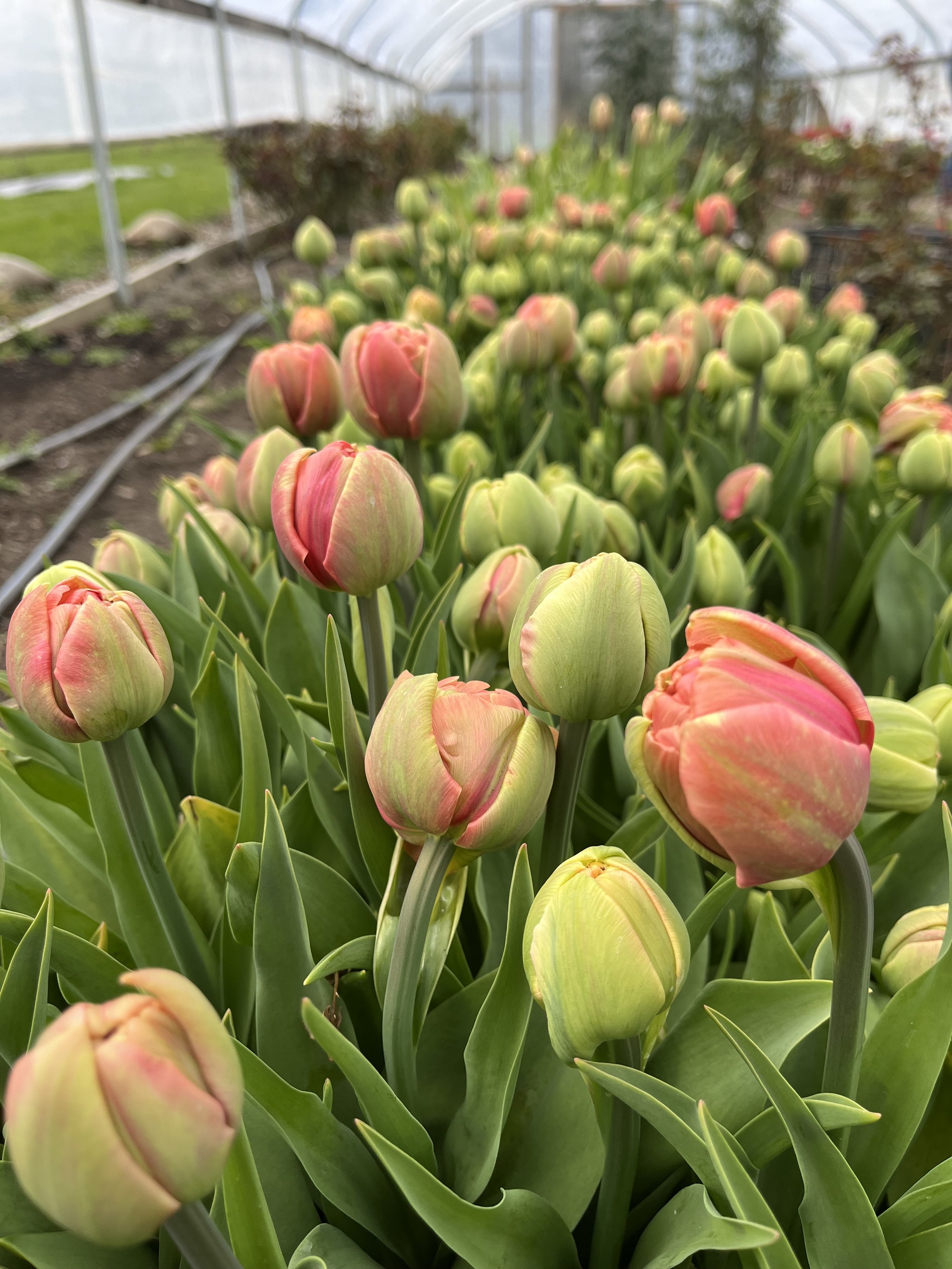
Harvest stage
The iconic images of endless tulip fields in full bloom are typically from bulb producers, not cut flower farms. Those fields are grown specifically for bulb production, where the goal is to allow the plant to fully mature and store energy back into the bulb for future seasons. On a cut flower farm, the priority is different—we’re growing for the vase, not for bulb regeneration.
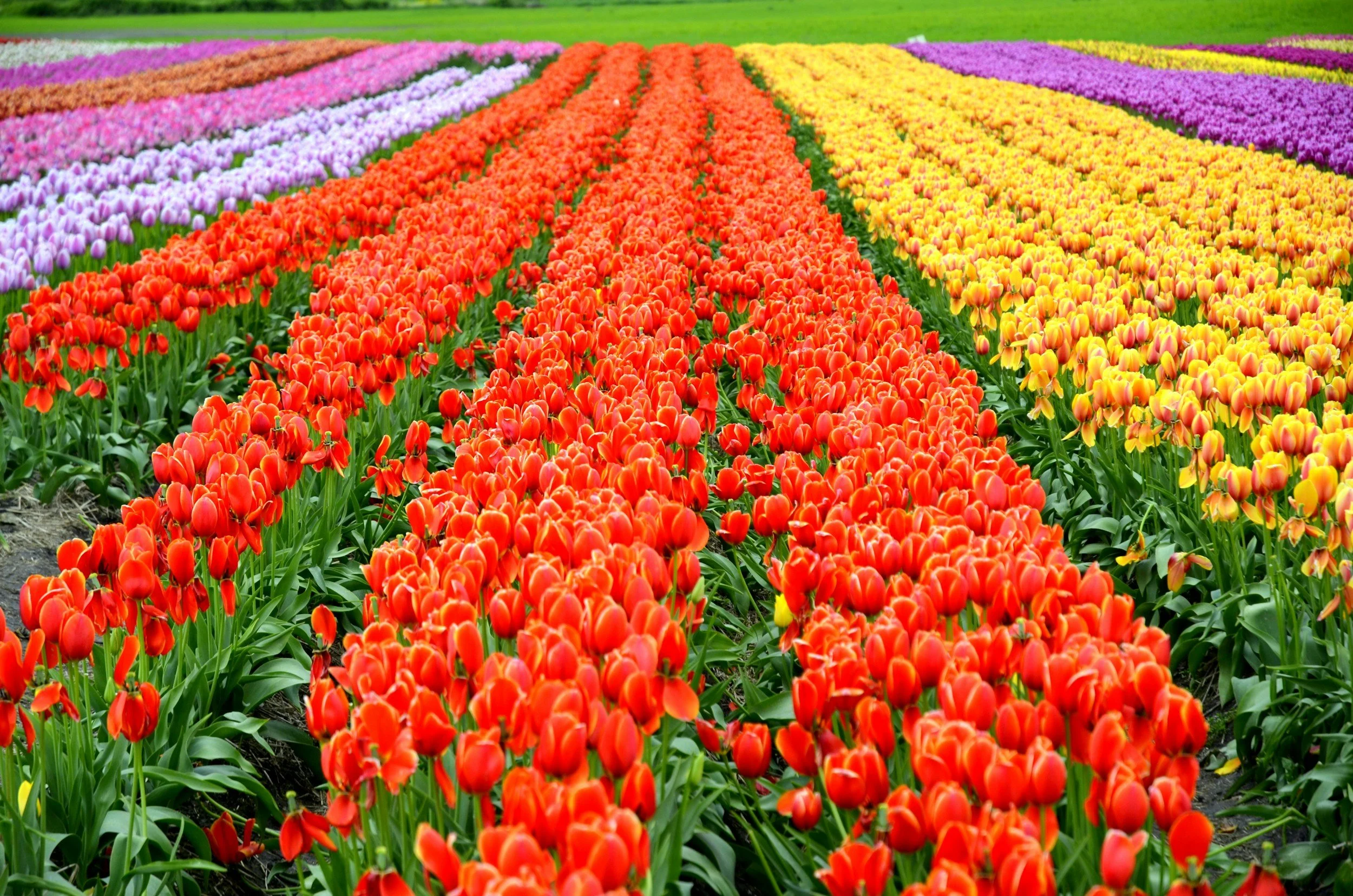
Local bulb producer fields
In fact, most tulips grown for cut flowers are treated as annuals. After harvest, the entire plant—bulb included—is removed from the soil and discarded or composted. While tulips are technically perennials, reusing bulbs for consistent, high-quality cut flower production is unreliable. Each season, farms invest in new bulbs to ensure uniformity, strong stems, and premium blooms.
That investment is significant. Tulip bulbs are expensive, and most are sourced internationally from major growing regions like the Netherlands. Between rising bulb costs, international shipping fees, and tariffs, the price of producing tulips continues to climb. It’s a labor of love—and a calculated risk each spring.

Fall bulb arrival
So when you bring home a bouquet of farm-grown tulips, you’re getting more than just a flower. You’re getting a carefully timed harvest, a product of global supply chains, and a bloom that was grown specifically to brighten your home—not a field.
Tulips may not bloom in the field the way you expect—but in your vase, they truly come to life.
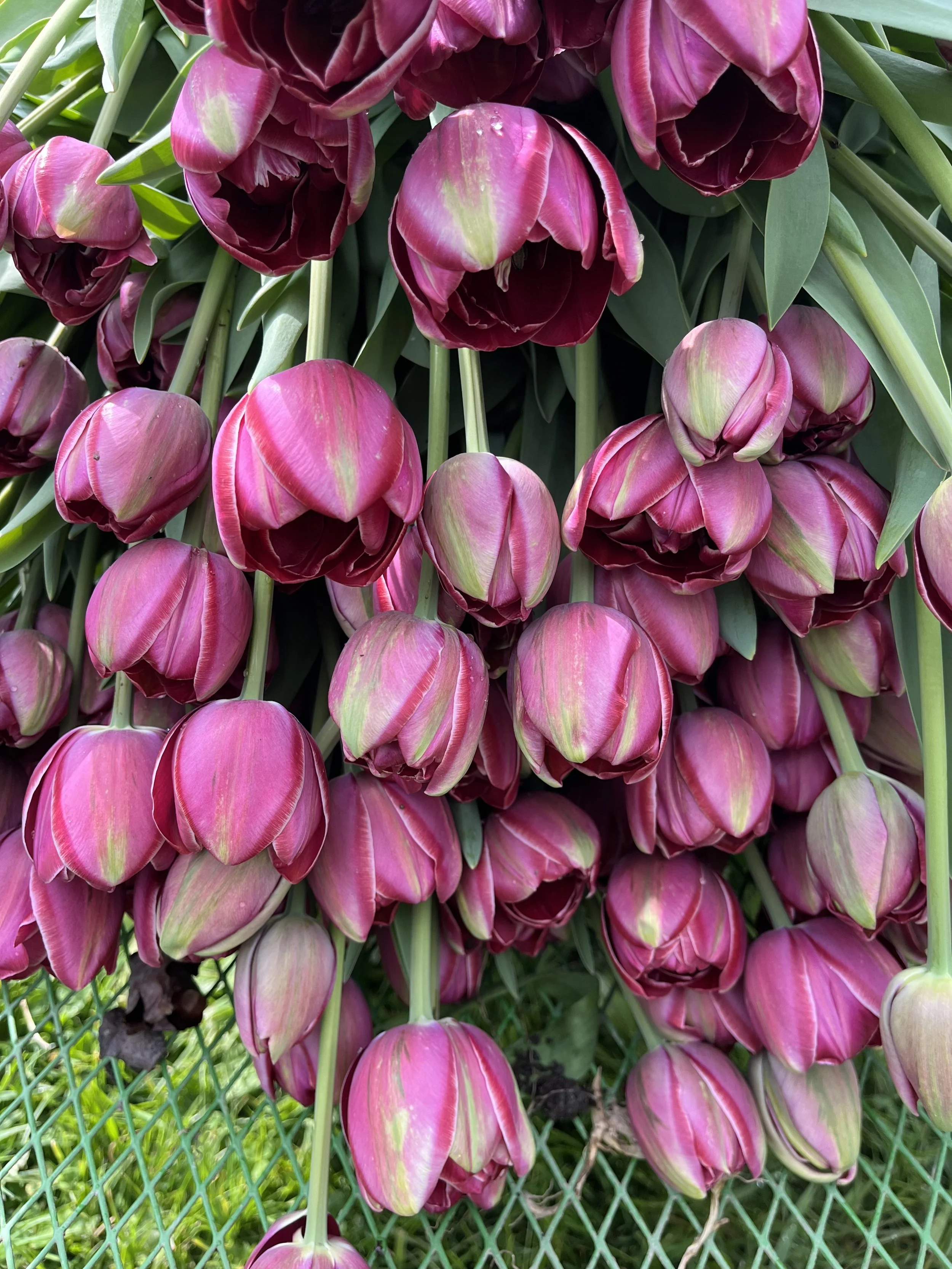
Dream Touch