How to start and plant ranunculus
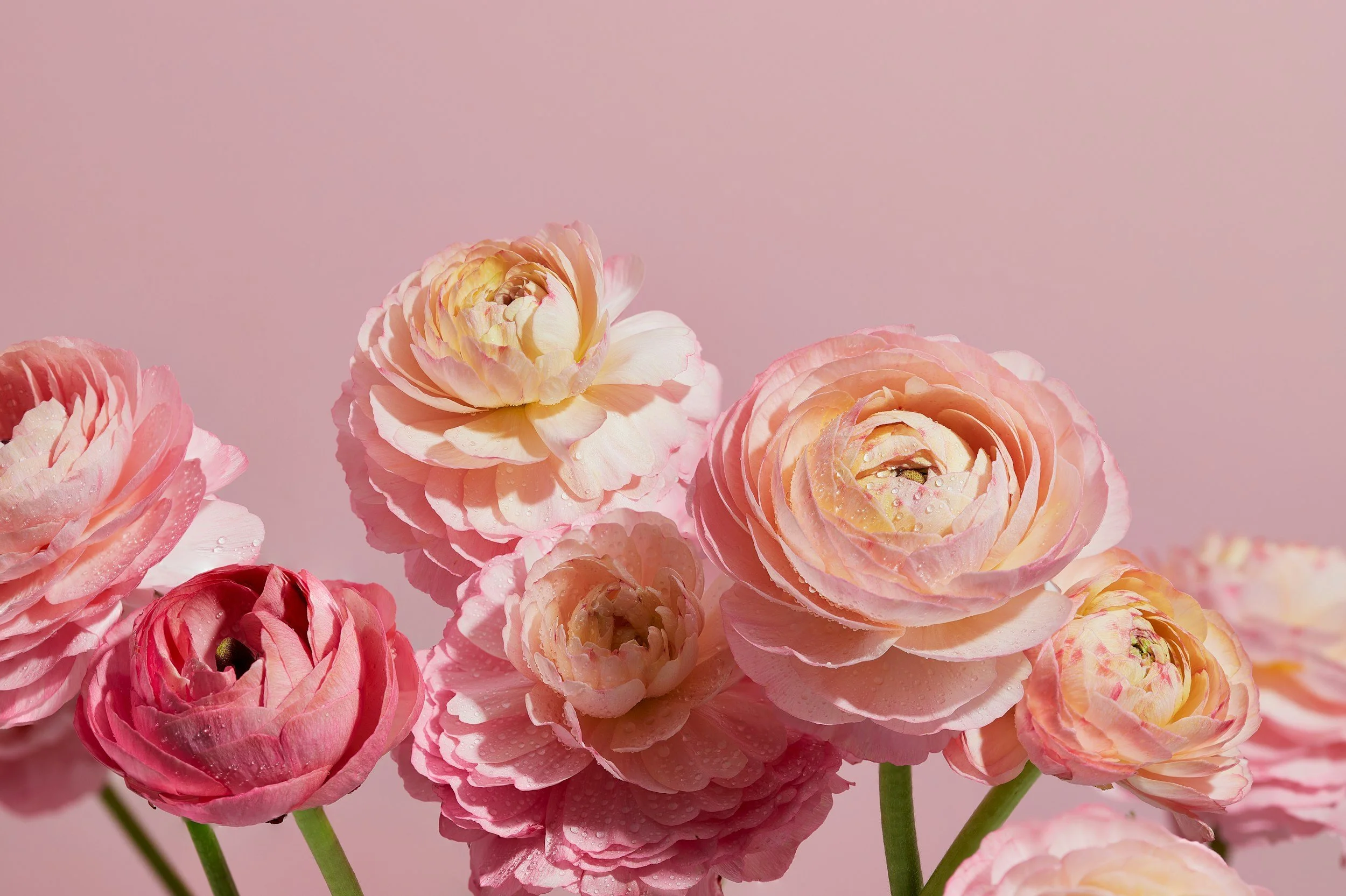
Ranunculus are the flowers that make people stop mid-scroll — layered petals, soft colors, and that dreamy, almost paper-thin texture. The good news: they’re surprisingly easy to grow once you know their one big secret — they start as weird little octopus looing corm and need a gentle wake-up routine before planting.
Here’s a simple, gardener-friendly guide to get you from dry corms to armfuls of blooms.
When to Plant
Timing depends on your climate:
Mild winters (zones 8–10): plant in fall for early spring blooms(Zone 8 you may need to cover if you fall plant)
Cold winters (zones 3–7): plant in late winter or very early spring after hard freezes. Best success in PNW is to spring plant.
If your ground freezes solid, think of ranunculus like tulips with trust issues — they want cool weather, not brutal cold.
Step 1: Soak the Corms
Those octopus-shaped corms arrive dormant and shriveled. Soaking wakes them up.
Fill a bowl with cool water
Soak for 3–4 hours
They’ll plump up and look alive again
Avoid soaking overnight — they can rot if they sit too long.
Step 2: Pre-Sprout (Optional but Powerful)
If you want stronger plants and earlier blooms:
Place soaked corms in a tray of slightly damp potting mix
Keep them in a cool, dark place (40–50°F / 4–10°C) for about 10–14 days
Tiny roots will form — that’s your green light to plant
This step is a game changer if you’ve had spotty success before.
Step 3: Choose the Right Spot
Ranunculus are picky about comfort:
Full sun to partial sun
Well-draining soil (they hate soggy feet)
Sheltered from strong wind
If your soil is heavy clay, mix in compost or plant in raised beds.
Step 4: Planting Depth & Spacing
Plant claws pointing down
Depth: about 2 inches (5 cm)
Spacing: 4–6 inches apart
Water lightly after planting — moist, not swampy.
Care Tips for Big, Healthy Blooms
Keep soil evenly moist while growing
Feed with a balanced fertilizer every 2–3 weeks once leaves appear
In warm climates, provide afternoon shade
Cut flowers often — harvesting encourages more blooms
They’re fantastic cut flowers and can last over a week in a vase.
After Blooming
When foliage yellows and dies back:
Stop watering
Lift and dry corms if winters are wet or freezing
Store in a cool, dry place for next season
In mild climates, you can leave them in the ground.
Common Beginner Mistakes (So You Don’t Make Them)
❌ Planting in soggy soil
❌ Forgetting to soak corms
❌ Planting upside down
❌ Letting them bake in hot spring sun
Ranunculus love cool roots and bright light — think spring meadow vibes.
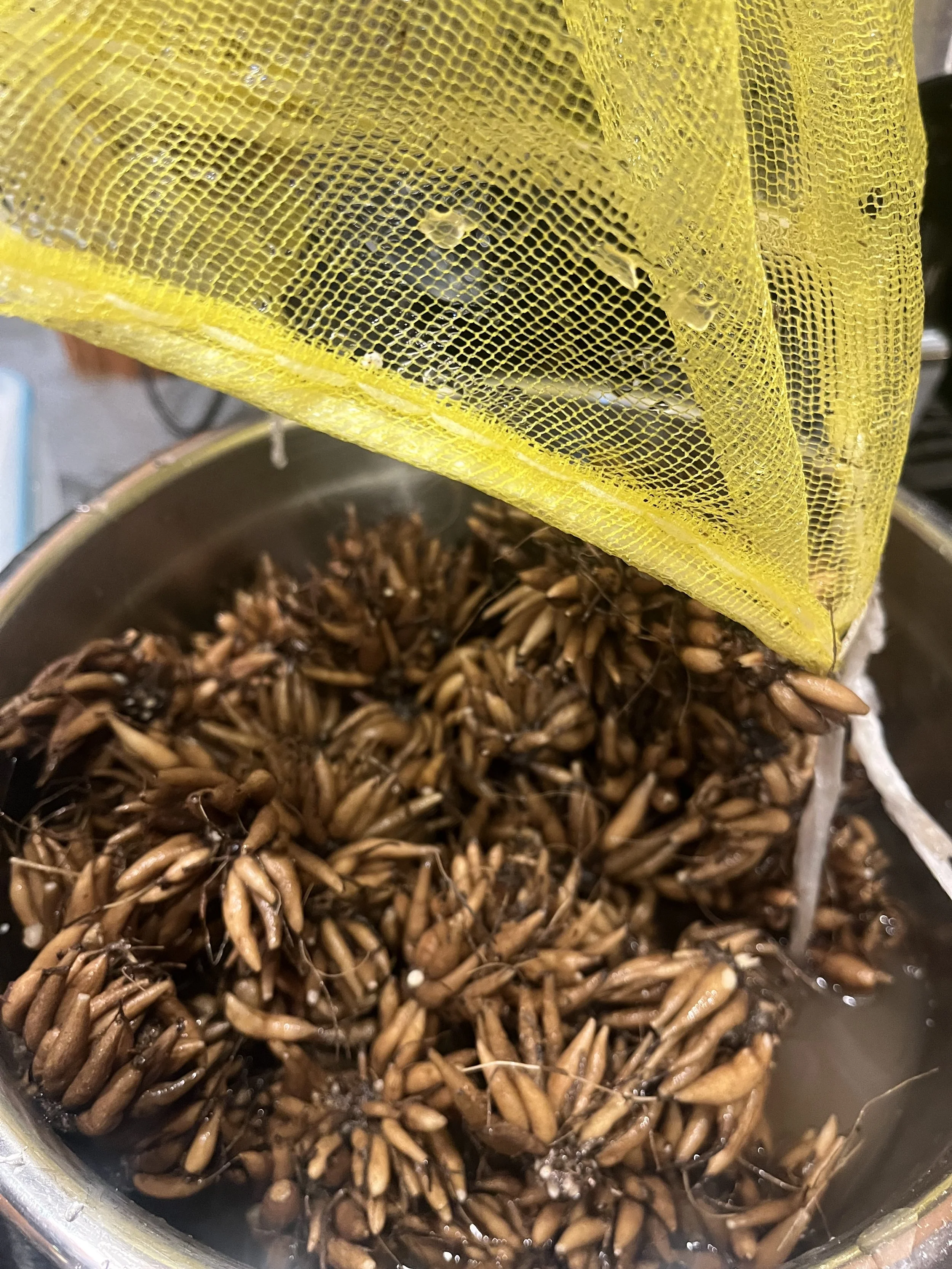
Corms soaking
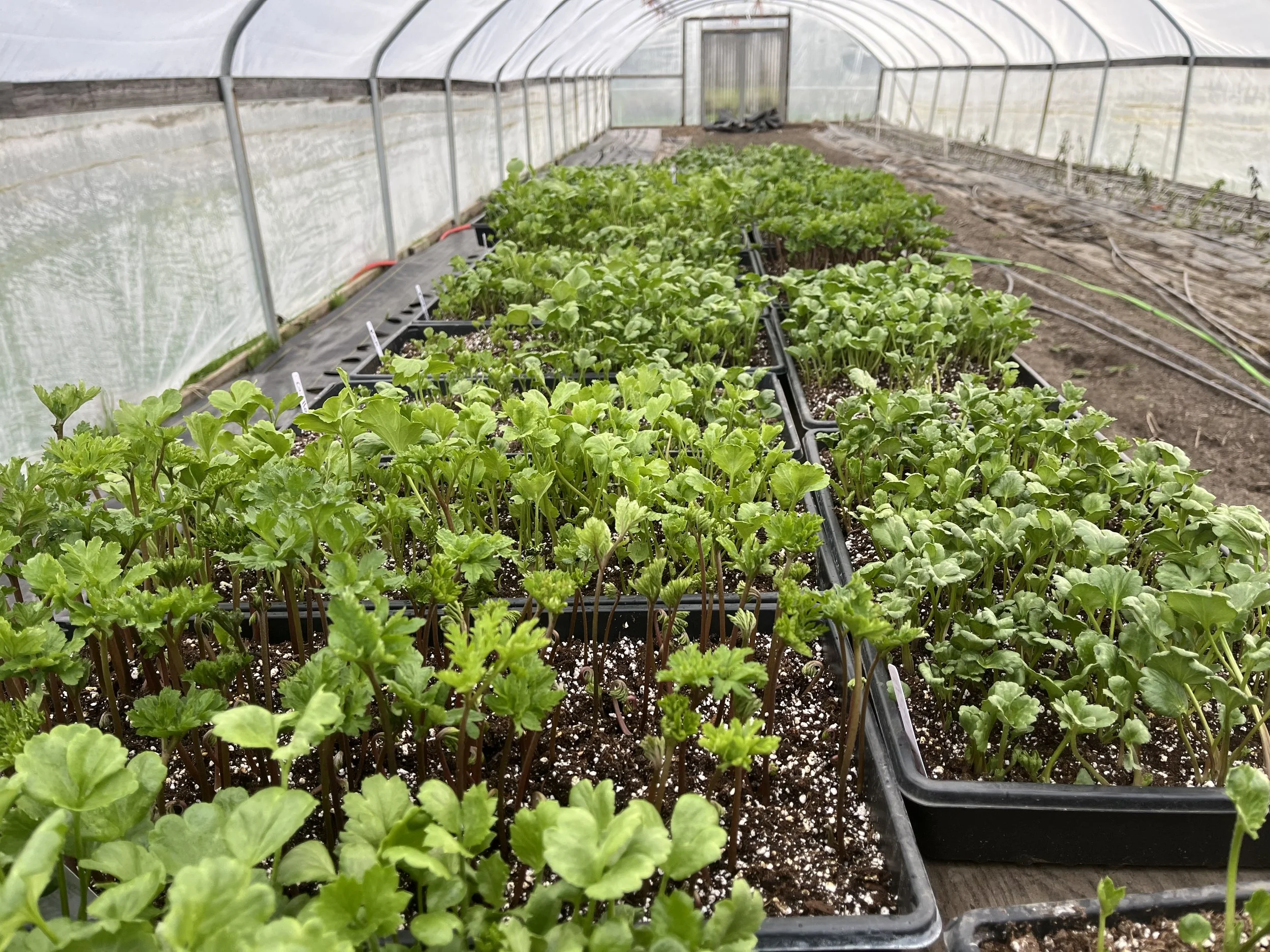
Pre sprouted ranunculus in tray before being planted
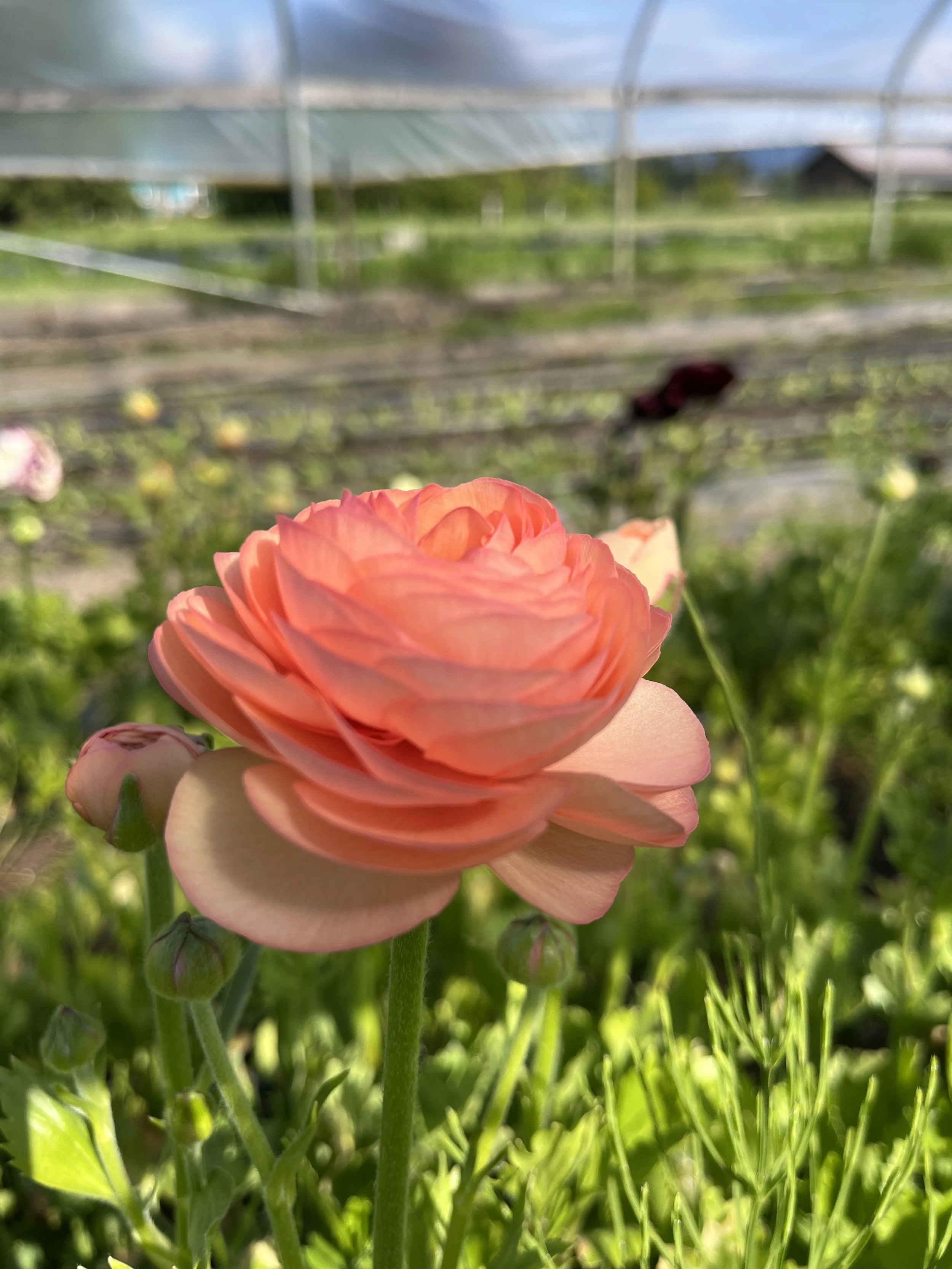
Salmone Ranunculus